
INVESTMENT READINESS
Modernising a PE-backed business to drive loyalty, grow sales and raise its value
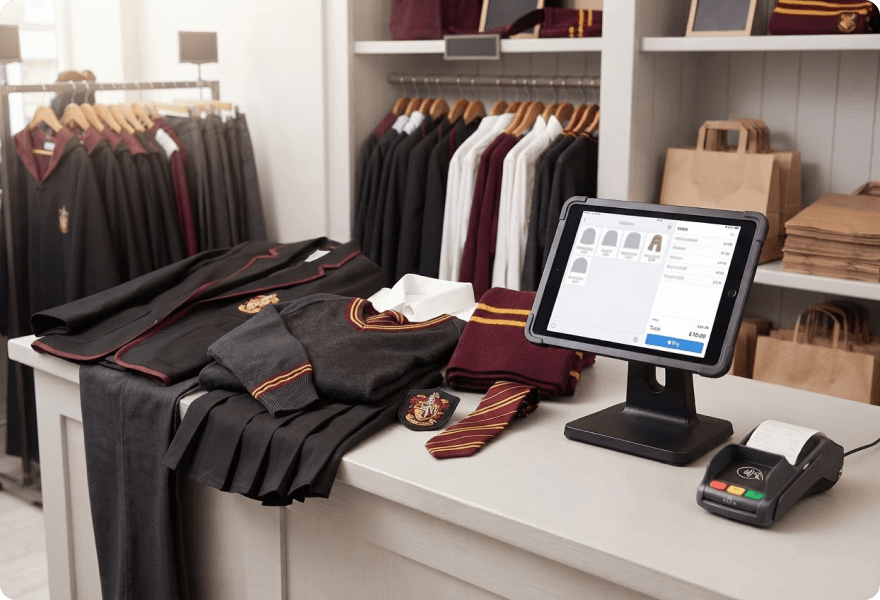 AI-generated illustration
I led the digital and operational transformation of a PE-backed schoolwear business, building the platform and capability to grow sales, build customer loyalty and increase its value for its owners ahead of a sale.
- Sector
- School uniform retail and wholesale
- Role / engagement type
- Group Head of Ecommerce & Digital Transformation
- Period
- 2019–2021
ABOUT THE BUSINESS
A PE-backed school uniform retailer and wholesaler serving parents, schools and trade customers. Its operations span stores, school-specific product ranges and wholesale distribution, with thousands of individual school requirements.
PE-BACKED · MULTICHANNEL · B2B & B2C
Story snapshot
Where it started, what I did and what changed. Figures are from Banner’s filed accounts, the JRNI case study and my own records.
THE PROBLEM
Ambitious growth across several sites and no single platform
 Several sites, no single platformThird-party, in-house and ERP-supplier sites; limited digital capability.
 Thousands of school-specific rulesEach school on the platform had its own policies and product rules.
 Acquisitions and investor aheadThe foundation had to support both.
WHAT I DID
Platform, capability and governance
 Moved sites onto one platformKept existing sites trading while building one shared Magento back end.
 Built supporting capabilityCRM, marketing automation and a 31-store booking system.
 Set up governance and toolsA digital advisory board and The Fitting Room sizing tool.
THE RESULT
Company-level and programme outcomes
- 10.8%turnover growth by 2021
- £298kincremental email-driven revenue
- 90/100customer satisfaction, store booking system
The situation
Banner & Monkhouse had ambitions to grow through organic expansion and acquisition. When I joined, the business traded across several websites on different platforms, a mix of third-party, in-house and ERP-supplier builds, with little in-house digital capability. My job was to keep those sites trading and improving while moving the business onto one new platform.
Its operating model made that harder. More than 3,500 schools on the platform, including those served through wholesale customers, each had their own policies and product rules, so a conventional retail ecommerce approach would not work.
The challenge was to build a digital and operational foundation that could support these different customer needs, accommodate acquisitions and strengthen the business's position ahead of a future investor transition.
Managed a complex customer supply chain

Parents
Buying uniform online, shown only the items their child's school allows.

Schools
More than 3,500 on the platform, each with its own branding, uniform policy and product rules.

Wholesale
Retailers buying stock to sell on to schools.
What I did
The short version
I kept the existing sites trading while leading the selection and delivery of one Magento platform for parents, schools and wholesale, built the supporting CRM, automation and booking capability, and set up the governance and in-house tools, including The Fitting Room sizing tool, to scale it.
Leading the transformation
I reported directly to the CEO and led the digital, systems and operational transformation. I traded the existing sites day to day, including SWI, the group’s pure-play online schoolwear retailer, which was an in-house build, alongside third-party platforms and a site built by our ERP supplier. I improved them while I led the requirements, selection and implementation of one Magento-based ecommerce platform serving parents, schools and wholesale customers through a shared back end. It included school-specific portals, purchasing journeys designed around uniform policies and integration with existing business systems.
 AI-generated illustration
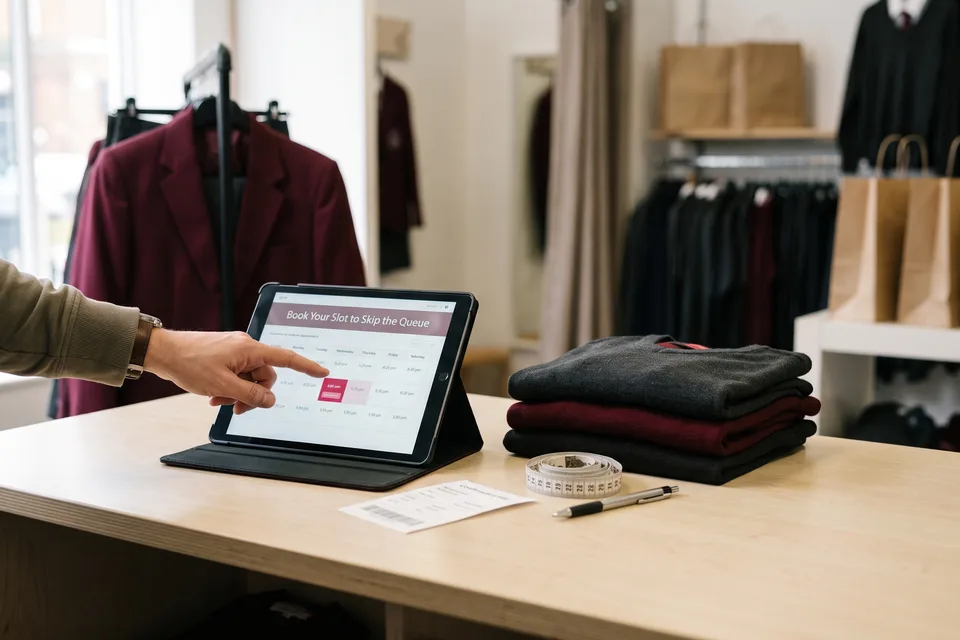
31 stores: booking system live within weeks
JRNI, the booking software supplier, describes how Monkhouse introduced online appointments within weeks at the height of Covid, so customers could prepare safely for back to school. It reports that the system stayed stable under demand and was customised with JRNI’s developers to be school-specific. I led the requirements, selection and implementation, and it stayed in place after Covid. Read JRNI’s case study (opens in a new tab)
Building supporting capability
The platform was only one part of the work. I built supporting capabilities across CRM, marketing automation and product information management, introduced a booking system across 31 stores, and developed the business case for improved business intelligence and reporting.
Governance and tools
I also established a quarterly digital advisory board, bringing external specialists into the review of the technology roadmap, and led The Fitting Room, an online sizing tool. After a third-party product tested poorly, I moved it in-house so the business owned the IP and data, and had an alpha live on SWI within months. I also explored a photo-based version, and stopped it on child-safeguarding grounds: the right call was to keep a human-measured approach.
 AI-generated illustration
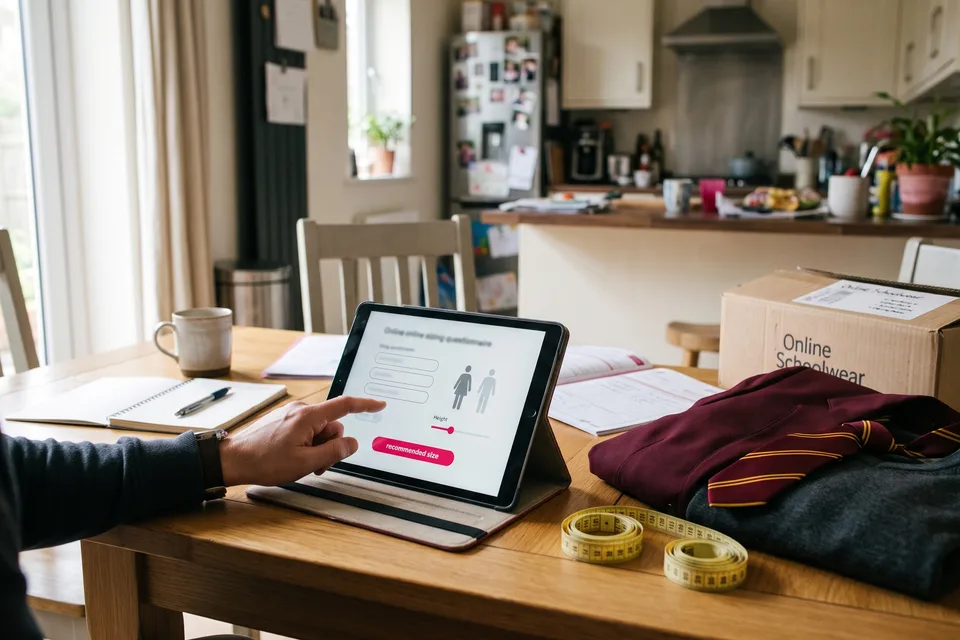
The Fitting Room: an online sizing tool, built in-house
An online sizing tool for school uniform, built in-house so the business owned the IP and the data. Parents answer a few questions about their child, including body shape. The tool compares the answers with average sizing data and our garment specifications, recommends a size, then checks it against feedback and returns. I had an alpha live on SWI within months, and it went on to Monkhouse.
An operating model the business could own
My focus was on building a digital operating model the business could own, develop and scale — including the ability to integrate acquired businesses without increasing costs at the same rate.
Result
10.8%turnover growth by 2021
Company-wide, 2021 turnover had grown 10.8% and operating margin had risen from −0.8% to 10.8% (two separate measures), with online at 40% of sales, ahead of a private equity buy-out in October 2021. I led the digital response when Covid closed the stores.
£298kemail-driven revenue
CRM and marketing automation built from scratch delivered £298k in incremental email-driven revenue across the group's retail and wholesale brands. Average order value also increased 7% year-on-year following the ecommerce re-platform.
90/100customer satisfaction
The store booking system, delivered across 31 locations within weeks during Covid, helped manage customer flow safely through the back-to-school peak and contributed to a customer satisfaction score of 90/100.
Sources: JRNI case study: Monkhouse booking system (opens in a new tab) · MML Capital: Banner investment summary (opens in a new tab) · Banner Limited accounts, Companies House (opens in a new tab)
This work was undertaken during my employment at Banner & Monkhouse Ltd. It reflects my previous leadership experience, not a Coherent Works client engagement.
How to read this page. Figures with a source come from that company’s published accounts or reports. All others come from my own records of the role. Banner & Monkhouse Ltd has not reviewed or endorsed this page or Coherent Works. Suppliers are named only as tools I used. Spotted something wrong? Email enquiries@coherentworks.co.uk and I’ll correct it.
Images labelled “AI-generated illustration” were made with AI to illustrate the story. They do not show real people, premises or products.
Facing a similar challenge?
If your business needs scalable digital operations, stronger internal capability or a transformation programme that supports growth and investment, let's have a conversation.